

The Ultimate Guide to Mango Fried Rice: A Tropical, Savory Sensational Weeknight Dinner
- Mango Fried Rice
- Thai mango fried rice, easy weeknight dinners, tropical dinner recipes, sweet and savory recipes, jasmine rice recipes, vegan fried rice variations, spicy mango chicken rice, healthy 20-minute meals.
- Ultimate Mango Fried Rice Recipe: Sweet, Savory & Ready in 20 Minutes
- Discover how to make the best tropical Mango Fried Rice at home! This comprehensive guide features step-by-step instructions, essential chef secrets for non-mushy grains, trending flavor variations (vegan, spicy, protein-packed), and complete nutritional breakdowns. Perfect for a quick, exotic weeknight dinner.
There is something genuinely magical about the intersection of tropical sweetness and deep, umami-rich savoriness. While pineapple has long held the crown in the realm of fruit-infused stir-fries, a contemporary culinary shift has taken place. Food lovers and home chefs across the globe are turning their attention to an arguably more delicate, aromatic, and luxurious alternative: Mango Fried Rice.
Whether you are seeking quick easy weeknight dinners to spice up your routine or hunting for vibrant tropical dinner recipes to impress guests at your next weekend gathering, this dish checked every single box. It is fast, highly customizable, inherently adaptable to various dietary needs, and offers an explosion of textures and flavors in every spoonful.

In this ultimate comprehensive guide, we will unpack the history, the culinary science of stir-frying fruit, the foundational components, a foolproof master recipe, and trending variations that will establish this dish as a permanent fixture in your weekly meal rotation.
The Rise of Fruit-Infused Stir-Fries
Stir-frying fruit with rice is not a modern gimmick; it is an ancient culinary technique deeply rooted in Southeast Asian gastronomy. In traditional Thai cooking, dishes like Khao Pad Sapparod (Pineapple Fried Rice) have beautifully demonstrated how natural fruit sugars caramelize against a screaming-hot wok, cutting through salty fish sauce and pungent garlic.
Thai mango fried rice is the natural, evolution of this concept. Mangoes bring a distinct, velvety texture and a floral fragrance that pineapples simply cannot replicate. As global palates increasingly crave sweet and savory recipes, the mango version has transitioned from a niche regional specialty to a worldwide viral food trend. It represents the ultimate fusion of traditional technique and modern, ingredient-driven cooking.
The Anatomy of the Perfect Stir-Fry
Achieving restaurant-quality fried rice at home requires an understanding of how individual ingredients interact under intense heat. Fried rice is simple to make, but it is equally easy to mess up if the structural foundations are ignored.
Here is what you need to master before firing up your stove:
1. The Rice (The Undisputed Foundation)
The single biggest mistake home cooks make is using freshly boiled, warm rice. Fresh rice contains a massive amount of surface moisture. When thrown into a hot pan, it steams instead of frying, leaving you with a sticky, clumpy, mushy mess.
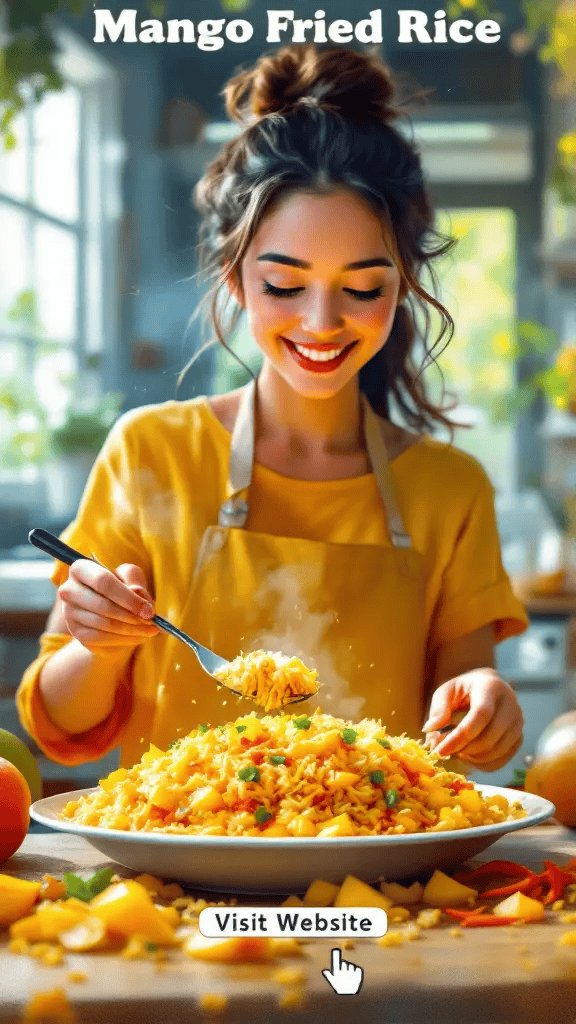
For a flawless texture, you must use day-old, refrigerated rice. Over twenty-four hours in the fridge, the starch molecules undergo a process called retrogradation, hardening the grains and drying out surface moisture. When stir-fried, these individual grains separate beautifully, absorbing the sauces without losing their structural integrity. Long-grain varieties like Jasmine rice are highly recommended for their floral aroma and ideal starch-to-moisture ratio.
2. The Mango (The Tropical Hero)
The success of your dish hinges heavily on the ripeness of your fruit. You do not want a completely soft, overripe mango that squishes into a puree the second it hits the pan. Instead, look for a firm-ripe mango (such as Kent, Tommy Atkins, or Ataulfo/Honey mangoes). It should yield just slightly to a gentle squeeze, smelling highly fragrant at the stem, but retaining enough physical firmness to hold its shape when cubed and tossed at high heat.
3. The Aromatics & The Crunch
A great stir-fry relies heavily on its aromatic base: freshly minced garlic, grated ginger, and crisp scallions (green onions). To balance the softness of the rice and the juiciness of the mango, introducing a crunch element is vital. Roasted cashews, peanuts, or even toasted coconut flakes provide that essential contrast that keeps your palate engaged.
Ingredients Checklist
Before heading into the kitchen, ensure your workstation is fully stocked with these core ingredients. Stir-frying moves incredibly fast, so having your mise en place (all ingredients prepped and measured beforehand) is absolutely critical.
The Base & Aromatics
- 3 cups Long-Grain Jasmine Rice (Cooked, cooled, and refrigerated for at least 12–24 hours)
- 2 tablespoons Toasted Sesame Oil or high-smoke-point Neutral Cooking Oil (like avocado, canola, or peanut oil)
- 3 cloves Garlic (Finely minced)
- 1 tablespoon Fresh Ginger (Grated or microplaned)
- 1 medium Red Bell Pepper (Diced small for color and crunch)
- 1/2 cup Frozen Peas and Carrots (Thawed)
- 3 Green Onions / Scallions (Finely sliced, whites and greens separated)
The Tropical Elements & Crunch
- 1 large Firm-Ripe Mango (Peeled and cut into precise 1/2-inch cubes)
- 1/2 cup Raw or Roasted Cashews (If raw, we will toast them in the wok)
- 1/4 cup Fresh Cilantro (Roughly chopped for garnish)
- 1 Fresh Lime (Cut into wedges for a bright finishing acidity)
The Savory Umami Sauce
- 3 tablespoons Low-Sodium Soy Sauce (or Tamari for a gluten-free option)
- 1 tablespoon Rice Vinegar (Provides a subtle tangy balance)
- 1 teaspoon Pure Honey or Agave Nectar (To gently enhance the mango’s natural sugars)
- 1/2 teaspoon Red Pepper Flakes or 1 minced Thai Bird’s Eye Chili (Adjust to your preferred spice tolerance)
Master Step-by-Step Cooking Guide
Cooking fried rice is an exercise in speed and heat management. Follow this sequence precisely to prevent the mangoes from turning mushy and to ensure your rice achieves those coveted, slightly charred, crispy edges.
1.Toast the Cashews:2-3 Mins.
Place a large, heavy-bottomed skillet or wok over medium heat. Add the cashews to the dry pan. Toast them, tossing frequently, until they turn beautifully golden brown and become highly fragrant. Immediately transfer them to a small bowl and set aside to preserve their crunch.
2.Sauté the Aromatics and Veggies:4-5 Mins.
Turn the heat up to medium-high and add your cooking oil to the wok. Once the oil shimmering, add the minced garlic, grated ginger, and the white parts of the sliced green onions. Stir-fry constantly for about 60 seconds until fragrant, being careful not to let the garlic burn. Toss in the diced red bell pepper, peas, and carrots. Sauté for another 3–4 minutes until the vegetables are tender-crisp.

3.Fry and Sear the Rice:3-4 Mins.
Turn your stovetop heat up to its absolute highest setting. Crank it up! Add the cold, day-old jasmine rice directly into the pan. Use a sturdy metal spatula to break up any stubborn clumps. Spread the rice out across the hot surface of the wok and let it sit undisturbed for 45–60 seconds at a time before tossing. This allows the grains to develop delicious, golden, crispy edges.
4.Incorporate the Umami Sauce:1-2 Mins.
In a small bowl, whisk together the soy sauce, rice vinegar, honey, and red pepper flakes. Drizzle this liquid mixture evenly over the rice. Toss vigorously for 1 to 2 minutes, ensuring every single grain of rice is evenly coated, beautifully glazes, and heated completely through.
5.Fold in the Mango and Finishes:1 Min.
Turn the heat down to medium-low. Add your cubed fresh mango, the toasted cashews, and the remaining green onion tops. Gently fold the ingredients together for no more than 60 seconds. You want the mango to just warm through and slightly release its aromatic oils without breaking down or losing its structural shape.
Remove the wok from the burner immediately. Scoop the steaming, colorful rice onto a large platter. Garnish generously with fresh cilantro and serve with lime wedges on the side. Squeezing fresh lime juice over the top right before eating cuts through the richness of the sesame oil and perfectly ties the sweet-savory profile together.
Pro Cooking Tips from Professional Chefs
Even with a great recipe, execution is everything. Keep these three core principles in mind to elevate your dish from home-cooked to restaurant-quality:
- Embrace High Heat: Professional kitchens use high-BTU burners that instantly sear ingredients. While home stoves aren’t as powerful, using a heavy cast-iron skillet or a traditional carbon steel wok can mimic this environment by holding massive amounts of heat. Don’t be afraid of the sizzle!
- The “Wok Hei” Secret: Wok hei translates to “breath of the wok.” It’s the smoky flavor achieved by vaporizing oil droplets in mid-air during high-heat tossing. While tough to perfect at home, letting your rice sit flat against a screaming hot pan for a minute without touching it creates a similar caramelized depth of flavor.
- Do Not Over-Stir the Fruit: The mango goes in at the absolute end for a reason. Stirring it constantly over high heat will activate its pectins, causing the fruit to dissolve into a sweet paste that ruins the texture of your rice. Treat the mango gently.
Dietary and Flavor Variations
One of the reasons this dish fits perfectly into the category of popular healthy 20-minute meals is its immense versatility. You can adapt this master blueprint to satisfy virtually any dietary preference or craving.
1. The High-Protein Upgrade: Spicy Mango Chicken Rice
If you want a hearty, all-in-one dinner, adding protein is seamless. Slice 8 ounces of boneless, skinless chicken breast or shrimp into bite-sized pieces. Sauté the protein in your oiled wok before step two, seasoning it with a pinch of salt, white pepper, and a splash of soy sauce. Once cooked through, remove it from the pan, proceed with the veggie and rice steps, and fold the protein back into the dish alongside the mangoes at the very end.
2. The Plant-Based Alternative: Vegan Fried Rice Variations
This dish is incredibly easy to keep 100% plant-based. To boost the protein content while keeping it completely vegan, swap out meat for crispy cubed tofu or a can of rinsed, drained chickpeas. Chickpeas hold up beautifully to high-heat frying, absorbing the savory soy sauce and providing a stellar, nutty texture that pairs wonderfully with sweet mango. Remember to replace the honey in the sauce recipe with pure maple syrup or agave nectar.

3. The Low-Carb Alternative: Cauliflower Mango Rice
For those monitoring their carbohydrate intake, you can seamlessly swap out the traditional jasmine rice for fresh or frozen cauliflower rice. Sauté the cauliflower rice directly with the vegetables for 5–6 minutes until all excess moisture evaporates and the “grains” take on a light golden color. Because cauliflower rice lacks the heavy starches of white rice, it provides an ultra-light, refreshing, guilt-free base for the sweet tropical fruit.
Comprehensive Nutritional Profile
Eating well shouldn’t mean sacrificing bold, exciting flavors. This dish perfectly marries nutrient-dense whole foods with vibrant culinary satisfaction.
| Nutrient Component | Per Serving (Approx. 1.5 Cups) | Health Benefits & Daily Value Impact |
| Calories | 380 kcal | An excellent, balanced energy source for lunch or dinner. |
| Carbohydrates | 62g | Complex clean energy driven by starchy jasmine rice and natural fruit. |
| Fiber | 4.5g | Promotes excellent digestive health, primarily sourced from fresh mango and veggies. |
| Protein | 8g | Provides foundational muscle support (significantly higher if adding tofu, chicken, or shrimp). |
| Vitamin C | 85% DV | Powerful antioxidant boost coming straight from fresh mangoes and red bell peppers. |
| Healthy Fats | 11g | Heart-healthy monounsaturated fats derived from toasted cashews and sesame oil. |
Nutritional Insight: Mangoes are an absolute nutritional powerhouse, loaded with over twenty different vitamins and minerals. One serving of this fried rice provides nearly your entire daily requirement of Vitamin C, supporting immune health and enhancing iron absorption from the accompanying vegetables and cashews.
Frequently Asked Questions (FAQs)
Can I use frozen mango for this recipe?
While fresh, firm-ripe mango is highly preferred for the optimal textural experience, you can absolutely use frozen mango in a pinch. However, frozen fruit tends to release significantly more water as it thaws. To prevent a soggy stir-fry, completely thaw your frozen mango cubes, place them on a paper towel, and gently press down to remove all excess surface moisture before introducing them to your hot pan.
What can I use if I don’t have Jasmine Rice?
If Jasmine rice isn’t sitting in your pantry, long-grain white rice, Basmati rice, or even whole-grain brown rice make spectacular substitutes. Brown rice adds a beautiful, distinct nuttiness and a major fiber boost that complements the sweet profile of the fruit beautifully. The golden rule remains entirely unchanged: whatever variety you choose, ensure it is thoroughly chilled and completely dried out before frying.

how long does leftover mango fried rice keep in the fridge?
Leftovers can be safely stored in an airtight container in your refrigerator for up to three days. When you are ready to enjoy it again, reheat the rice in a hot skillet with a tiny splash of water or extra soy sauce to restore its moisture. Alternatively, microwave it in 30-second intervals, stirring gently between rounds so the mango warms through evenly without getting mushy.
Final Thoughts: Bring the Tropics to Your Table
In a culinary world where weeknight meals can occasionally feel monotonous, Mango Fried Rice stands out as a vibrant, joyful escape. It proves that healthy, efficient cooking doesn’t require compromising on complex, multi-dimensional flavor. By mastering the simple science of cold rice, high heat, and delicate fruit handling, you can easily replicate this spectacular restaurant classic in your very own kitchen.
Fire up your stove, gather your ingredients, and experience the ultimate sweet, savory, and aromatic tropical dinner tonight!